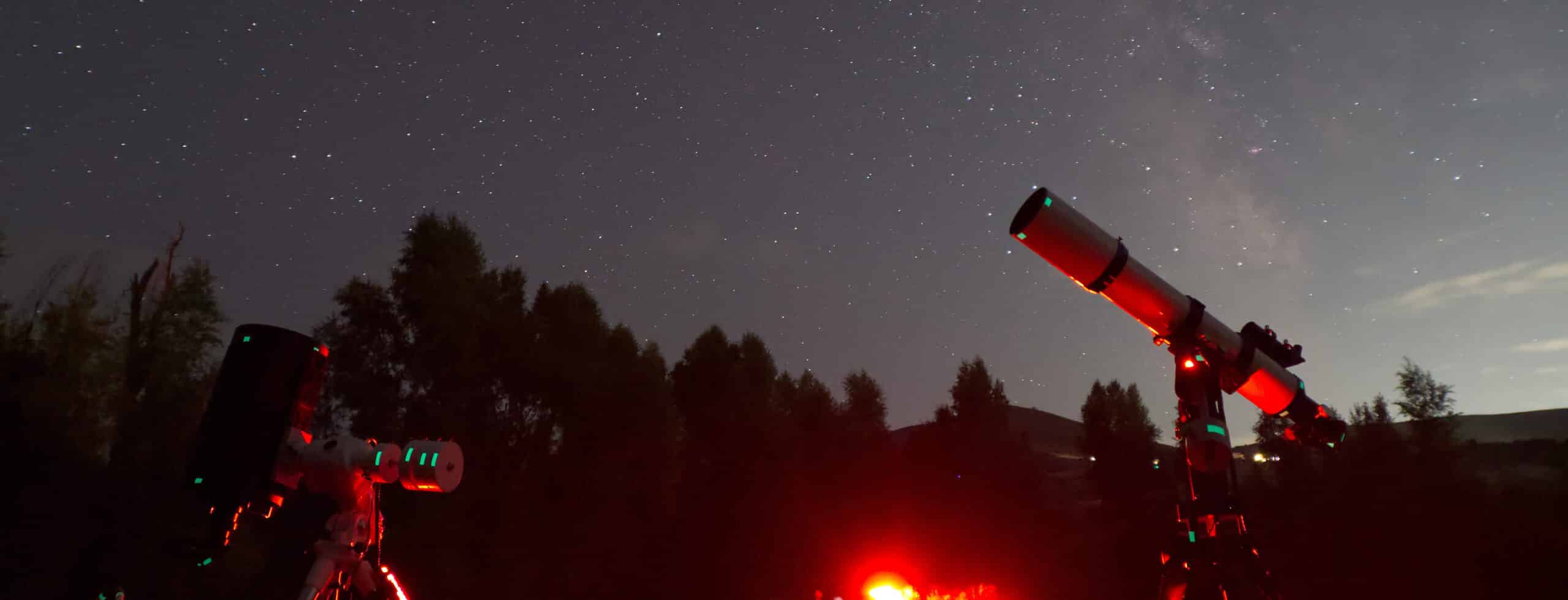
Stargazing Near Salt Lake City: A Local’s Guide to Utah’s Night Sky
You don’t have to travel far from Salt Lake City to experience Utah’s amazing dark skies. From quiet mountaintops and secluded valleys to sweeping desert landscapes, Northern Utah has some incredible places to explore the night sky. Whether you are hoping to see the Milky Way, see planets through a telescope, or simply escape the city lights for an evening, this guide will help you find the right spot and make the most out of your night under Utah’s dark skies.
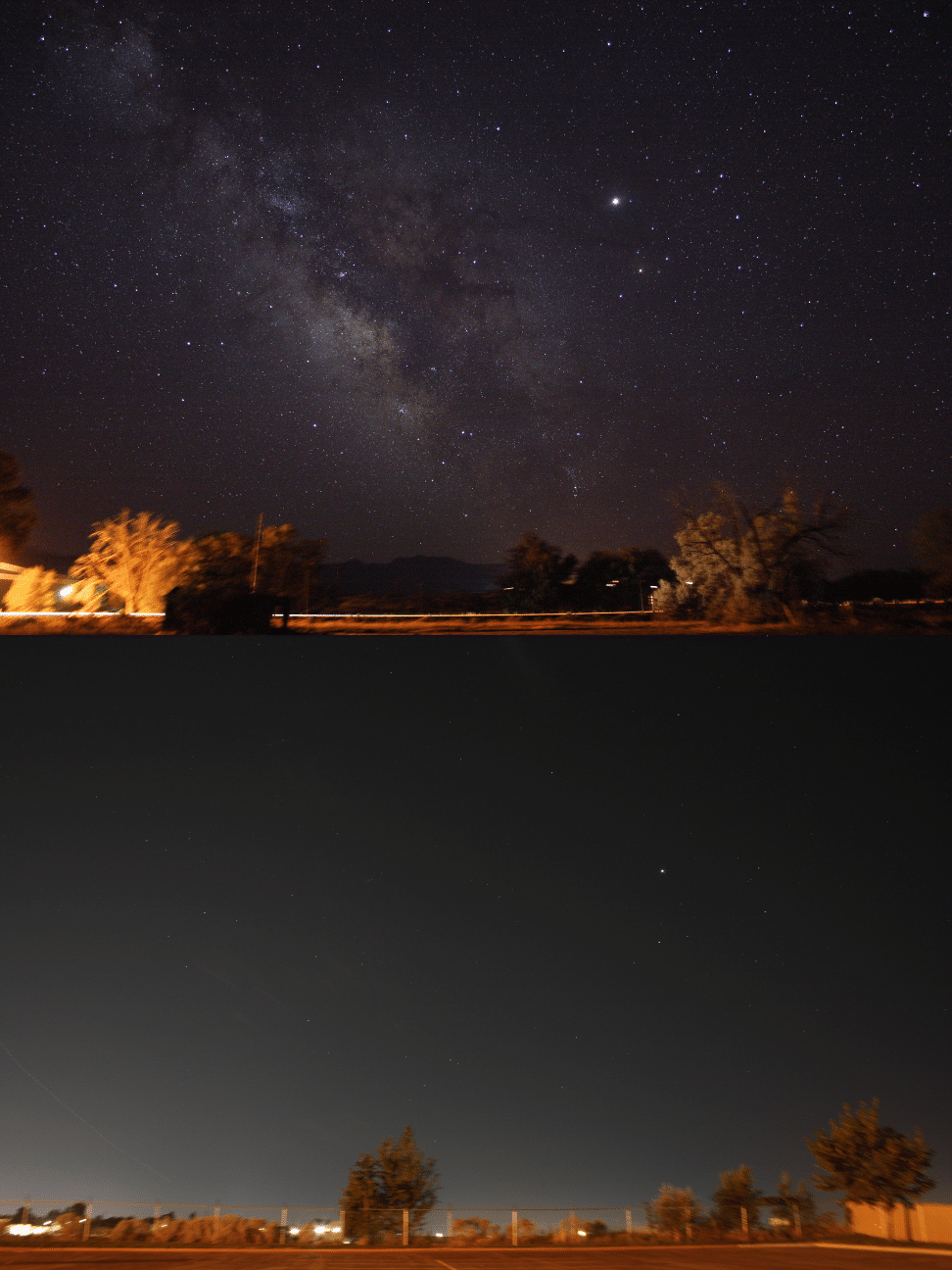
What is Light Pollution and Dark Skies?
What is light pollution? DarkSky International defines light pollution as “… the human-made alteration of outdoor light levels from those occurring naturally.” They continue by stating “When we over-light, fail to use timers and sensors, or use the wrong color of light, we can negatively affect many parts of our world, including migratory birds, pollinators, sea turtles, and mammals, including humans.” Dark skies, on the other hand, are locations where the light pollution in the sky is minimal and you can truly experience the night sky.
Light pollution partly stems from the common myth that more light is always better and safer. This is untrue and oftentimes, excessive lighting can actually be more dangerous. One example that almost everyone can relate to is being blinded by an oncoming car’s headlights, even when their high beams aren’t on. The Federal Highway Administration (FHWA) found in a 2005 report that brighter headlights on both the oncoming and driver’s car made it harder for the driver to detect a pedestrian near the road. “VESs with higher maximum output had shorter pedestrian detection distances and were rated as more discomforting.” VES stands for visual enhancement system, which are things like headlights.
We tend to overlight our cities, making them much brighter than necessary. This wastes taxpayer money and contributes to other harmful impacts. Back in 2019, a group of researchers ran an experiment in Tucson, Arizona where they dimmed their city lights from 60% to 30% of their maximum output after midnight. The researchers reported that no one contacted the city to comment on the lighting change. DarkSky International estimates that the United States wastes $3.3 billion annually, while the global waste reaches at least $50 billion annually, due to wasted light shining into the sky.
Because of light pollution, if you want to experience Utah’s dark skies at their fullest, you are going to need to travel away from the cities. Lucky for you, Utah has a lot of places that are amazing to stargaze from!
Best Places to Stargaze Near Salt Lake City
Utah has the highest concentration of DarkSky International certified International Dark Sky Places of anywhere in the entire world! Currently there are 28 locations in Utah that are certified International Dark Sky Places. Many of these places include state parks and national parks, but some of them are also towns and communities. Here in Utah, we care about our dark skies, so you will often find towns and cities with lighting ordinances that help reduce our contribution to light pollution.
For Northern Utah, we have six certified International Dark Sky Places within one hour of Salt Lake City and many other uncertified locations as well. The six certified locations, in no particular order, are as follows: Antelope Island State Park, North Fork Park, East Canyon State Park, Rockport State Park, Jordanelle State Park, and Timpanogos Cave National Monument. Any of these six locations would give you the Utah dark sky experience. That being said, there are darker skies in Utah if you are willing to travel further but in this blog post, I will be focusing on locations with a travel time of about one hour from Salt Lake City.
My general advice to the Northern Utah stargazer is to travel around an hour or further away from I-15 either East or West. Along with this, you will want to make sure that the place you stop is not too close to any towns or cities. You do not have to go to a certified Dark Sky Place to have a good experience, you can also find uncertified locations that are darker than some certified locations. Heading west and stopping in the desert or the salt flats, or heading east and stopping in the Uintas will both yield great dark skies. Two other helpful tools for finding your own stargazing site are the Dark Sky Place Finder and a Light Pollution Map.
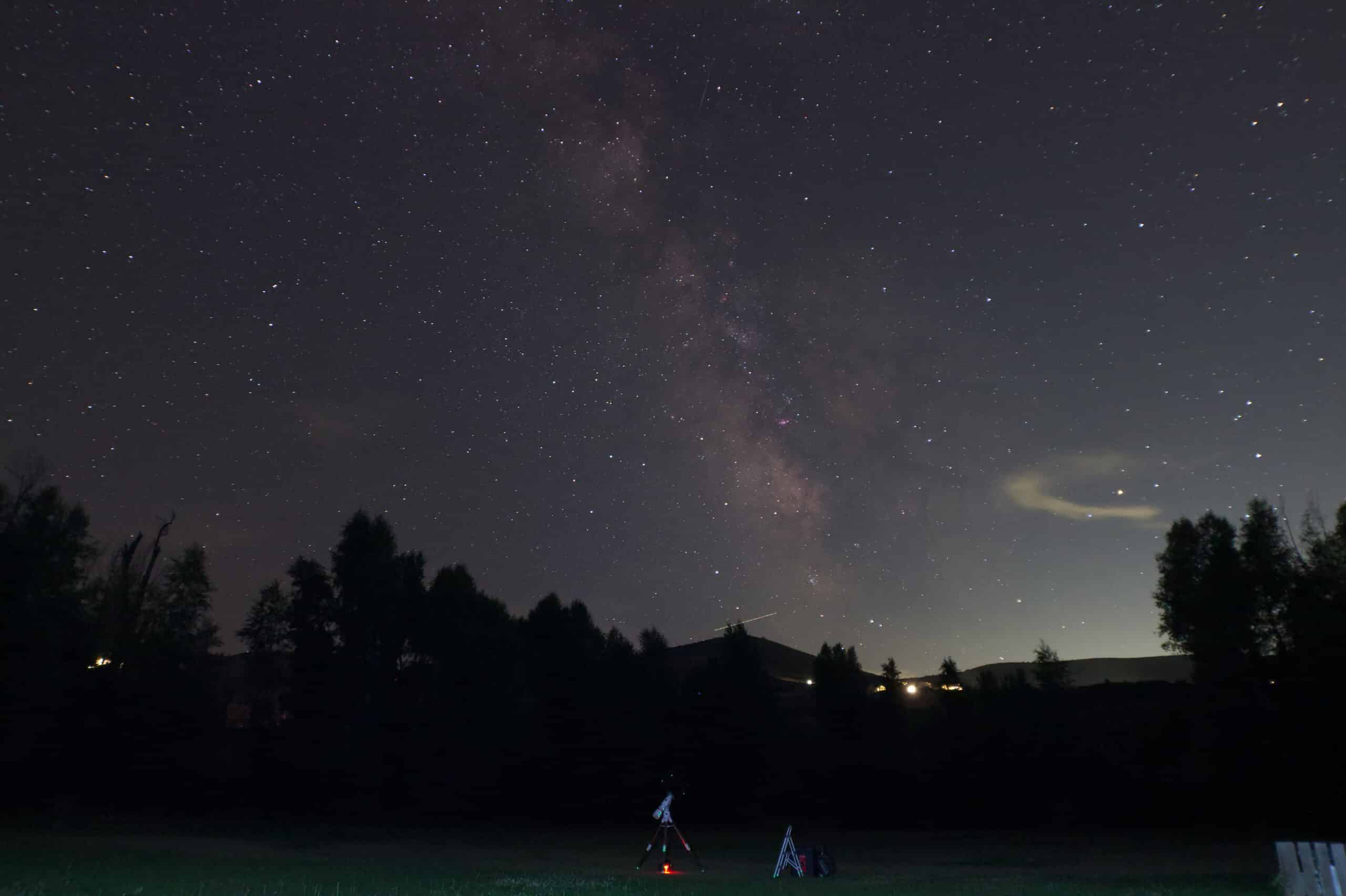
From any of these locations, you can expect to see more stars than you can count, and under the right conditions, you may even see the Milky Way. The Milky Way is not visible throughout the entire year, so make sure to keep reading to find out when the best time to see it is.
When Is the Best Time to Go Stargazing
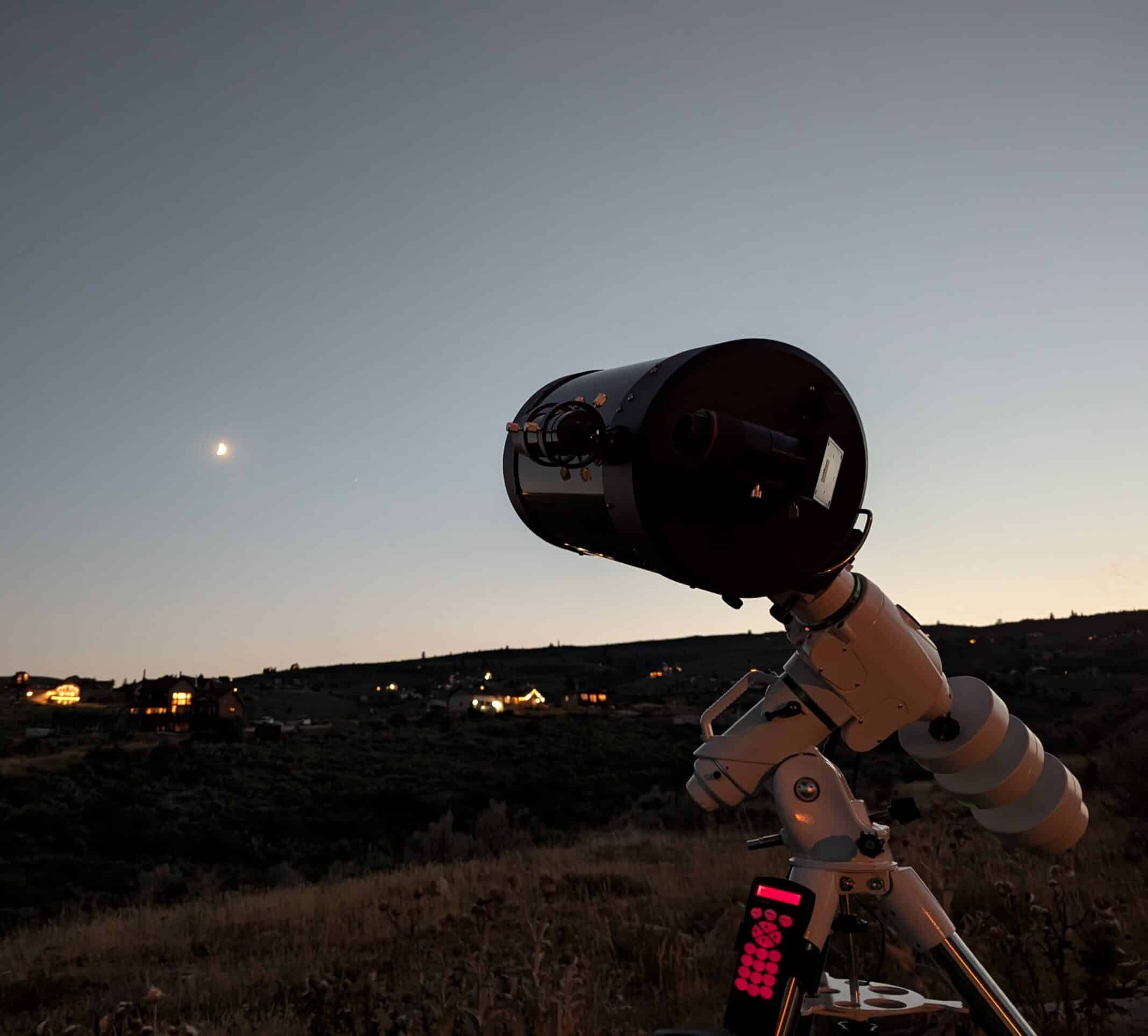
One of the most important factors when finding a time to go stargazing is the current lunar phase. Although the full moon is very beautiful, it has a similar effect on the sky as light pollution by washing out the stars visible in the sky. To avoid this, you will want to pick a time when the moon is not up. Generally speaking, within 3-5 days before and after the new moon will yield minimal moonlight in the sky.
Something else that surprises people is how long sunlight remains in the sky after sunset. In very dark skies, it can take around 1.5-2 hours for there to be no more sunlight visible in the sky. So, if you go stargazing shortly after sunset, plan to stay for at least 1.5 hours after sunset.
The Milky Way is not always visible, but is only visible from early May until early October. My personal favorite months to view the Milky Way are July and August.
The planets do not have a simple cycle to follow in regard to visibility, so it is best to check if the planet you want to see is up that time of year.
Stargazing Tips and Tricks
Throughout more than ten years of stargazing experience, I have picked up a few tricks that I find are very helpful for beginner and even some experienced stargazers.
- Avoid bright lights (this includes your cell phone screen). It typically takes your eye around 30-60 minutes to fully adjust to the darkness and looking at a bright light can reset that timer right back to zero minutes. Dim red lights are a good alternative.
- Bring warm layers. You will always get colder than you think you will when stargazing, so bring some layers just in case.
- Bring a blanket or a seat that can recline. You are going to be spending the night looking up, and tilting your head backwards for a long period of time can be very uncomfortable.
- Stay hydrated. The last thing you want while stargazing is to be dehydrated which can lead to dizziness or disorientation.
- Go stargazing with an experienced guide like us! Stargazing with a guide is a great way to further your understanding of the night sky. In our dark sky experiences, I also bring a really big telescope!
- * Advanced Tip *
Averted vision is a useful trick for observing faint objects. At night, our eyes rely heavily on rod cells, which are especially sensitive to dim light. Rods are more concentrated away from the center of our vision, so if you look slightly to the side of a faint object, it can appear brighter. Give this a try when observing a faint star or nebula! You can even try it while looking at the Milky Way.
What Can You See With the Naked Eye vs. a Telescope?
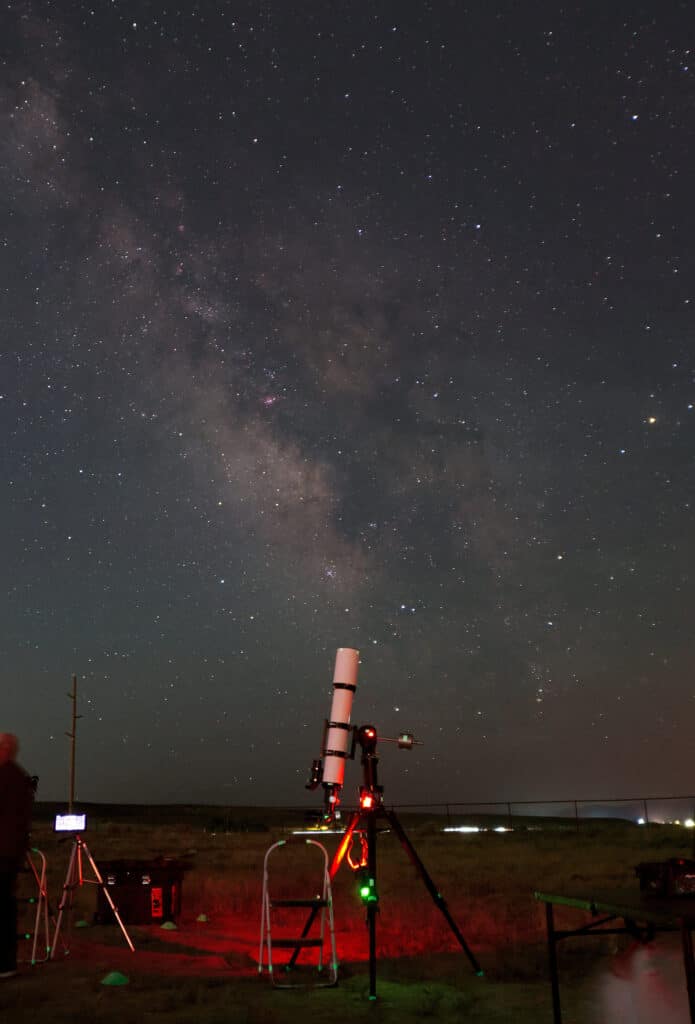
Stargazing with just your eyes is something that everyone needs to experience. There is just something special about spending time under the night sky and seeing it with your own eyes without the aid of any devices or equipment. With the naked eye you’ll primarily be looking at constellations, the Milky Way, and a few open star clusters. There are even some deep sky objects that are visible with the naked eye, like the Andromeda galaxy and the Lagoon nebula.
The main purpose of a visual telescope is to enhance what your eyes can see by themselves. Visual telescopes don’t use any cameras or screens, but rather they are a window into the night sky. Telescopes magnify objects and collect more light than your eyes can gather on their own. Telescopes work like a funnel for light, the larger the telescope the more light you can funnel into your eye. This allows you to see things that are very distant and very dim (invisible to the naked eye). I don’t believe that telescopes should be the sole focus of stargazing, which is why all my telescope-aided stargazing experiences also emphasize what we can see with our naked eye.
There are so many amazing wonders in the night sky just waiting to be discovered, whether with the naked eye or through a telescope! I am lucky enough to live in this amazing state where we have dark skies so accessible to everyone. There are becoming fewer and fewer places in the world where people can experience what we experience here. I hope that in the future we as a state, and collectively throughout the world can continue minimizing our light pollution contributions so everyone can experience the night sky at its fullest.
Thank you for reading my blog post! You are the reason for my passion.
I honestly believe that every single human has some interest in space. For some, that interest is already flourishing, and for others, they just haven’t heard something cool enough yet! If I can inspire just one person with this blog, to go outside and look up, then it was a success.
My goal for this blog is to give you insights into the night sky as well as practical tips, recommended stargazing locations, telescope reviews, and more. Expect to see more posts soon.Thanks!
👋
If you want to learn more about our stargazing tours, click the button below.


Leave a Reply